
What is the Difference Between Mold Removal and Mold Remediation
Contact COIT for a professional cleaning!
Mold is a common issue in many homes and buildings that can cause worry and uncertainty. Understanding the difference between mold removal and mold remediation is crucial in effectively addressing this problem.
This article will explore these two distinct processes, their importance, and why professional intervention is necessary for a healthy living environment.
According to the U.S. EPA, building materials should be dried within 24 to 48 hours after water intrusion to help prevent mold growth, highlighting why addressing moisture quickly is just as important as removing visible mold.
Mold Removal vs. Mold Remediation at a Glance
If you're trying to decide between mold removal and mold remediation, the biggest difference is simple. Mold removal focuses on cleaning away visible mold, while mold remediation addresses both the mold and the moisture problem that caused it in the first place.
Although the terms are often used interchangeably, professional restoration companies typically use the term "mold remediation" because mold spores naturally exist indoors and outdoors. The goal isn't to eliminate every mold spore, which isn't possible, but to return mold levels to a normal, healthy level while preventing future growth.
Mold Removal | Mold Remediation |
Removes visible mold | Removes mold and addresses the underlying cause |
Focuses on surface cleaning | Includes inspection, containment, cleaning, drying, and prevention |
Best for very small, isolated areas | Best for widespread, hidden, or recurring mold |
Temporary solution if moisture remains | Long-term solution |
Mold may return | Helps prevent future mold growth |
Understanding Mold
Mold is a type of fungus that grows in damp and humid conditions. It can appear in various colors and is often found in bathrooms, basements, and kitchens.
Mold not only damages your property but can also pose serious health risks, especially for those with allergies or respiratory issues.
Can Mold Ever Be Completely Removed?
One of the biggest misconceptions about mold is that it can be completely eliminated from a home. In reality, mold spores naturally exist in both indoor and outdoor air. Because of this, completely removing every mold spore is impossible.
Professional mold remediation focuses on reducing mold to normal background levels while correcting the moisture problem that allowed it to grow. By eliminating excess moisture and properly cleaning affected materials, remediation helps prevent mold from returning.
When Is Mold Removal Enough?
Not every mold problem requires a full remediation project. Small patches of mold on non-porous surfaces, such as tile, glass, or metal, can often be cleaned successfully if the moisture source has already been corrected.
Mold removal may be appropriate when:
- The affected area is small.
- The mold is limited to non-porous surfaces.
- There is no ongoing leak or moisture problem.
- Mold has not spread into walls, insulation, or HVAC systems.
If mold keeps returning after cleaning, it's usually a sign that a more comprehensive remediation approach is needed.
What is Mold Removal?
Mold removal is the process of physically eliminating mold from surfaces in your home. This method is typically used when mold growth is visible and contained to a small area.
The process involves cleaning and disinfecting surfaces to remove mold spores. However, mold removal does not address the underlying moisture problem, meaning mold can return if the environment remains damp.
What is Mold Remediation?
Mold remediation is a more comprehensive approach. It not only involves removing the visible mold but also focuses on identifying and addressing the root cause of the mold growth.
Remediation includes a thorough inspection of the property, moisture control, mold removal, and prevention strategies.
This method is ideal for extensive mold infestations or when mold is found in HVAC systems and other hard-to-reach areas.
Professional remediation often includes:
- Finding and repairing the source of moisture
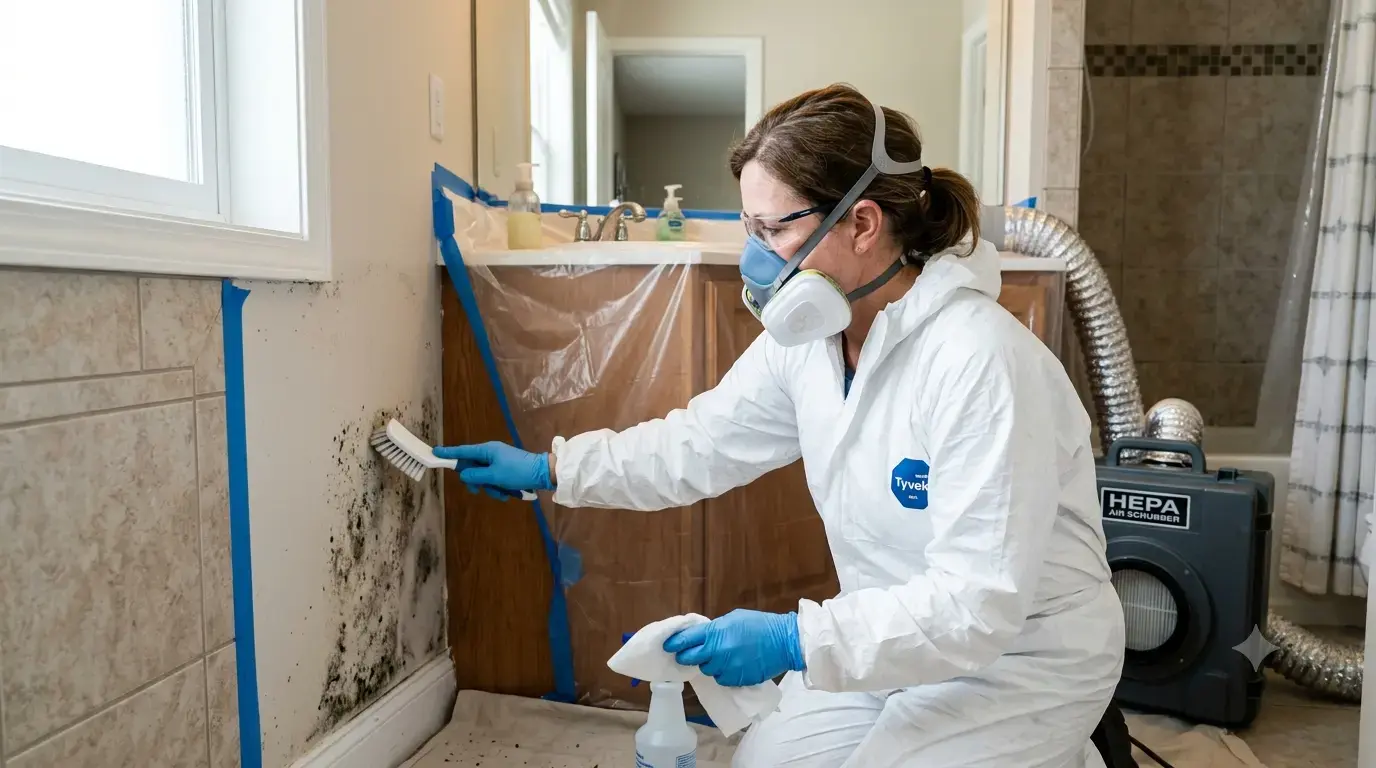
- Isolating contaminated areas with containment barriers
- Using HEPA air filtration to capture airborne spores
- Removing mold-damaged materials when necessary
- Cleaning and disinfecting remaining surfaces
- Drying affected areas with commercial equipment
- Restoring damaged building materials
- Final inspections to verify the area is safe
Differences Between Mold Removal & Mold Remediation
While mold removal is a quick fix for small mold issues, mold remediation offers a long-term solution.
Remediation involves a step-by-step process that includes containment, removal, cleaning, and prevention. This comprehensive approach ensures that the mold does not return and that the indoor air quality of your home remains healthy.
What Happens During Professional Mold Remediation?
Most professional remediation projects follow a structured process:
- Inspection and moisture detection
Professionals identify visible and hidden mold and locate the moisture source. - Containment
Plastic barriers and negative air pressure help prevent mold spores from spreading throughout the home. - Air filtration
HEPA air scrubbers capture airborne mold spores during cleanup. - Removal of contaminated materials
Drywall, insulation, carpet, or other porous materials that cannot be cleaned may need to be removed. - Cleaning and sanitizing
Remaining surfaces are cleaned using specialized mold remediation techniques. - Drying
Commercial drying equipment removes excess moisture. - Repairs and restoration
Damaged materials are repaired or replaced. - Final inspection
The area is inspected to confirm remediation has been successfully completed.
When Do You Need Mold Remediation Instead of Mold Removal?
Professional remediation is generally recommended when:
- Mold covers more than about 10 square feet.
- Mold returns after repeated cleaning.
- Water damage has affected drywall, insulation, or flooring.
- Mold is growing inside walls, ceilings, crawl spaces, or HVAC systems.
- Occupants experience allergy or respiratory symptoms.
- There is a strong musty odor but no visible mold.
According to the U.S. EPA, remediation projects are categorized by the size of the affected area. Areas smaller than 10 square feet are considered small-scale cleanup projects, while larger contamination often requires progressively greater containment and professional remediation procedures.
Health Implications of Mold
Exposure to mold can cause a range of health issues, especially in individuals with allergies, asthma, or compromised immune systems.
Symptoms may include:
- Nasal congestion
- Throat irritation
- Coughing or wheezing
- Eye irritation
- Skin irritation
Long-term exposure to mold can exacerbate these symptoms and lead to more serious health conditions.
Why Does Mold Keep Coming Back?
If mold returns after you've cleaned it, the problem usually isn't the cleaning method. It's the moisture.
Common causes include:
- Plumbing leaks
- Roof leaks
- Flooding
- Condensation
- Poor ventilation
- High indoor humidity
- Wet basements
- HVAC moisture
- Crawl space moisture
Professional Mold Services
Handling mold can be challenging and risky, which is why professional mold services are essential.
Experts in mold remediation have the tools, knowledge, and experience to safely and effectively remove mold. They perform a comprehensive assessment, including a mold risk assessment and mold inspection, to determine the best course of action.
DIY approaches may not fully eradicate the mold and can sometimes worsen the situation. The CDC advises that buildings left wet for more than 48 hours after flooding or major water damage will generally support visible mold growth and should be remediated because of potential health risks, regardless of the type of mold present.
Mold Removal vs. Mold Remediation Decision Guide
Situation | Recommended Solution |
Mold on shower tile | Mold removal |
Mold on glass or metal | Mold removal |
Mold after flooding | Mold remediation |
Mold inside drywall | Mold remediation |
Mold in HVAC system | Mold remediation |
Mold keeps returning | Mold remediation |
Strong musty odor | Mold inspection and remediation |
Contact COIT for a professional cleaning!
Mold Inspection and Prevention
A key part of mold remediation is a thorough mold inspection. Professionals will assess the extent of the mold infestation, identify moisture sources, and recommend solutions to prevent future growth.
Regular inspections and maintenance, like fixing leaks and controlling humidity, are crucial steps in mold prevention.
Addressing Mold Health Risks
It's important to take mold health risks seriously. Professional mold remediation services not only remove the mold but also implement strategies to safeguard your health.
This includes using HEPA filters to clean the air and ensuring that contaminated materials are disposed of safely.
Mold Damage Control and Cleanup
Mold can cause significant damage to your property. Here's how professional mold services approach damage control and cleanup:
- Assessment and Inspection: Conducting a thorough inspection to identify the extent of mold damage.
- Removal of Contaminated Materials: Safely removing and disposing of materials like drywall, insulation, flooring, and wood that have been affected by mold.
- Cleaning and Disinfecting: Using specialized cleaning agents to disinfect areas where mold has grown.
- Drying and Dehumidifying: Ensuring all areas are completely dry to prevent future mold growth.
- Repair and Restoration: Repairing or replacing damaged structures and surfaces to restore your home to its pre-mold condition.
- Air Filtration: Utilizing HEPA filters to clean the air and remove lingering mold spores.
- Final Inspection: Performing a final check to ensure all mold has been effectively removed and the area is safe for habitation.
Porous vs. Non-Porous Materials
Whether a material can be cleaned depends on what it's made from.
Usually Cleaned | Often Removed and Replaced |
Glass | Drywall |
Tile | Insulation |
Metal | Ceiling tiles |
Plastic | Carpet padding |
Finished stone | Water-damaged carpeting |
Mold Contamination Cleanup
In cases of severe mold contamination, a specialized cleanup process is necessary.
This may involve using advanced techniques and equipment to ensure that all mold spores are removed from the home.
Mold Risk Assessment
A mold risk assessment is an integral part of the remediation process. Professionals evaluate the risk to your property and health using several key evaluations:
- Extent of Mold Infestation: Determining the size and scope of the mold growth, including areas that are not immediately visible.
- Mold Type Identification: Identifying the specific types of mold present, as some species can be more harmful than others.
- Source of Moisture: Locating the source of moisture that led to mold growth, such as leaks, condensation, or high humidity levels.
- Impact on Property: Assessing the extent of damage to the structure and materials of your property, including potential hidden damage.
- Health Risk Evaluation: Considering the potential health risks, especially for residents with allergies, asthma, or weakened immune systems.
- Air Quality Testing: Measuring the impact of mold on indoor air quality, which is crucial for understanding the severity of the infestation.
- Recommendations for Remediation: Providing a plan for effectively removing the mold and preventing its recurrence, tailored to the specific needs of your property.
Choose COIT for a Mold-Free Home
At COIT, we understand the importance of a mold-free home.
Our team of experts is dedicated to providing top-notch mold remediation services. We use the latest techniques and equipment to ensure your home is safe and healthy.
Don't let mold compromise your living environment. Contact COIT today for professional mold remediation services.
Understanding the difference between mold removal and mold remediation is key to effectively tackling mold issues in your home. While mold removal is a short-term fix, mold remediation offers a comprehensive solution that addresses the root cause of the problem.
Trust professionals like COIT to handle your mold issues safely and effectively. Remember—a mold-free home is a healthy home.
Contact COIT for a professional cleaning!
Frequently Asked Questions
Is mold removal the same as mold remediation?
No, mold removal focuses on cleaning visible mold, while remediation also addresses the moisture source and helps prevent mold from returning.
Why do professionals say mold remediation instead of mold removal?
Because mold spores naturally exist in indoor and outdoor environments. The goal is reducing mold to normal background levels rather than completely eliminating every spore.
Can I remove mold myself?
Small mold patches on non-porous surfaces are often suitable for DIY cleaning if the moisture problem has already been corrected. Larger infestations, hidden mold, or recurring mold should be evaluated by a professional.
Can mold come back after remediation?
If the underlying moisture problem has been corrected, professional remediation greatly reduces the likelihood of mold returning.
Does homeowners insurance cover mold remediation?
Coverage depends on your policy and the cause of the mold. Mold resulting from a covered water loss may be covered, while mold caused by long-term maintenance issues often is not.


