
IT Found a Home in Your Dryer Vent (That's Actually a Problem)
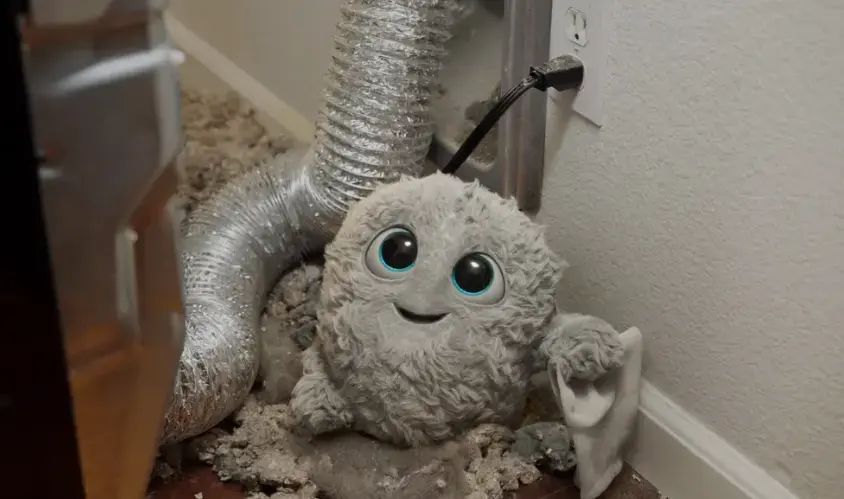
After you run the dryer, you clean the lint trap every time, or close enough to every time, which feels like it should count for something. You pull out the little screen, remove the gray fluff, and put the trap back in place. Done. Clean. Handled.
IT disagrees.
What you cleaned is the lint trap. What IT has been building in—quietly, consistently, one cycle at a time—is the dryer vent line itself. The duct that runs from the back of your dryer through the wall and out of your home. The part you cannot see, cannot reach, and, if IT has anything to say about it, will not think about until something goes wrong.
IT has been thinking about your dryer vent for years, and it’s time you started, too.
What Is Actually Back There
The dryer vent system is designed to do one thing: move hot, moist air (and the lint that comes with it) out of your dryer and out of your home. The lint trap only catches some of it. The rest travels down the vent line, and over time, IT builds up along the interior walls of that duct. Slowly at first, then less slowly. Layer by layer, cycle by cycle, until the airflow that is supposed to move freely is working against a narrowing tunnel of accumulated lint, debris, and whatever else IT has managed to collect back there.
IT is comfortable in dryer vents specifically because they are warm, dark, and almost never inspected. IT did not stumble into this location by accident. IT has excellent instincts about these things.
Why IT Can Lead to Bigger Issues
So, why should you care? Here is where this stops being about IT and starts being about your house.
Lint is highly flammable. A dryer vent clogged with lint buildup is, by definition, a duct running hot air past highly flammable material that has accumulated over months or years. According to the U.S. Fire Administration, dryers are responsible for approximately 2,900 home fires every year in the United States. Those fires cause an estimated 5 deaths, 100 injuries, and $35 million in property damage annually.
The leading cause of those fires? Failure to clean the dryer vent.
Not a mechanical failure or a manufacturing defect. The leading cause is lint buildup that was never removed. Basically, IT that was never dealt with.
The National Fire Protection Association recommends having your dryer exhaust system cleaned by a qualified professional at least once a year. Most homeowners have never had it done.
IT knows this. IT has structured its entire situation around this fact.
Signs IT Has Been There Too Long
Dryer vent buildup does not announce itself dramatically. IT is subtle about it, at first. But there are signs, and once you know what to look for, IT becomes much harder to ignore.
- Your clothes are taking longer to dry. If a load that used to take 45 minutes now needs two cycles, restricted airflow from lint buildup is the most likely explanation. IT has narrowed the vent enough that the dryer cannot do its job efficiently.
- Your dryer is running hot. If the dryer itself, the clothes coming out of it, or the laundry room in general feels unusually warm during a cycle, that is heat that is not escaping the way it should be. IT is trapping it.
- You notice a burning smell. This one should not be waited on. A burning smell during a dryer cycle is lint making contact with heat at a level that warrants immediate attention. Stop using the dryer and schedule a cleaning.
- The outdoor vent flap is not opening properly. The flap at the exterior vent opening should open when the dryer is running and allow air to escape. If it is not opening fully, or not opening at all, IT has likely reduced airflow enough to prevent proper venting.
- It has been more than a year since it was last cleaned. Or you have never had it cleaned. Or you moved into the home and have no idea whether it has ever been cleaned. In all three cases, IT is almost certainly present, and probably more present than you would prefer.
What IT Has Actually Built Back There
When COIT technicians clean a dryer vent that has not been serviced in several years, what comes out is rarely just lint. Depending on how long IT has been operating undisturbed, a dryer vent inspection may reveal:
- Dense lint accumulation packed throughout the duct line
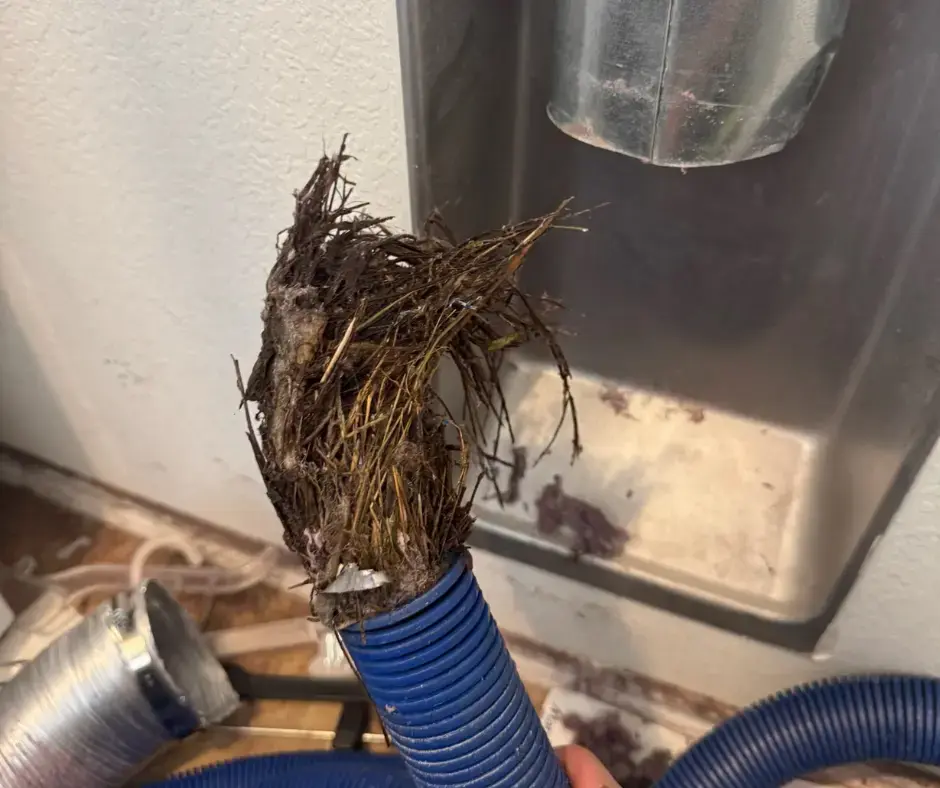
- Debris from outside that has entered through the exterior vent opening—including, in some cases, evidence that IT has had visitors of the bird or small animal variety (see below image)
- Crushed, kinked, or damaged flexible duct sections that have been restricting airflow and collecting buildup at the bends
- A vent termination cap that is partially or fully blocked
- White vinyl duct material that is no longer up to code, which is a fire hazard independent of whatever IT has added to the situation
None of this is visible from the laundry room, but all of it matters.
The Lint Trap Is Not Enough—And IT Knows It
This is worth saying directly, because the lint trap creates a reasonable sense of security that IT has been exploiting for decades.
Cleaning the lint trap after every load is genuinely good practice. It reduces the amount of lint that travels into the vent system, and it keeps the dryer running more efficiently in the short term. That said, it does not clean the duct, it does not reach the bends in the line where lint accumulates, it does not address the exterior vent, and it does not remove what IT has been packing in there since the last time (or the time before) a professional ran a rotary brush through the full length of the system.
The lint trap is only one small part of the job.
How Professional Dryer Vent Cleaning Actually Works
A professional dryer vent cleaning is not a long or complicated process, but it requires the right equipment to do properly—specifically, rotary brush systems designed to move through the length of the duct and dislodge what IT has packed in, combined with powerful vacuums that remove the debris rather than just relocating it.
A thorough service includes:
- Disconnecting the dryer and inspecting the full vent path
- Running rotary cleaning brushes through the entire duct line to break up and remove lint accumulation
- Vacuuming the interior of the dryer cabinet, where lint also collects around the drum and heating element
- Inspecting the exterior vent termination and clearing any blockage at the exit point
- Checking the duct material for damage, improper connections, or sections that need to be replaced
The result is restored airflow, a dryer that runs at the efficiency it was designed for, and a significantly reduced fire risk. IT does not enjoy this process and has no comment on the matter.
How Often You Should Clean Your Dryer Vent
The NFPA recommends having your dryer vents thoroughly cleaned once per year for most households. Certain situations warrant more frequent service:
- Homes with larger families doing higher volumes of laundry
- Households washing and drying a lot of heavy items—towels, bedding, pet blankets
- Longer vent runs, or vents with multiple bends, which accumulate buildup faster
- Any home where the vent has never been professionally cleaned, regardless of how long you have lived there
If you are not sure when your dryer vent was last cleaned(or if the answer is never) that is enough information to act on.
Frequently Asked Questions
Can I clean my dryer vent myself?
You can clean the section immediately behind the dryer, and doing so is better than nothing. But the flexible duct section accessible from the laundry room is only the beginning of the vent system. The full duct running through the wall—including the bends, the length, and the exterior —requires rotary brush equipment to clean properly. Surface cleaning moves some lint. Professional cleaning removes what IT has been building for years.
How long does a dryer vent cleaning take?
Most residential dryer vent cleanings take between 45 minutes and an hour and a half, depending on the length and configuration of the vent run. It is not a significant disruption, and the difference in dryer performance afterward is usually immediately noticeable.
What if my dryer vent runs a long distance or has a lot of bends?
Longer runs and vents with multiple elbows accumulate lint faster and are harder to keep clear. They are also the most likely to be significantly impacted by IT. Professional equipment is specifically designed to navigate these configurations—it is not a reason to avoid cleaning, it is a reason to make sure a professional is doing it.
My dryer still works fine. Does it still need cleaning?
Yes. A dryer that appears to be functioning normally can still have significant lint buildup in the vent line. Fire risk from dryer vent buildup is not always preceded by obvious warning signs. The NFPA's annual cleaning recommendation applies regardless of whether the dryer seems to be performing well.
Is dryer vent cleaning covered by homeowners insurance or a home warranty?
Coverage varies by policy. Some home warranties include duct and vent cleaning as part of preventive maintenance coverage. It is worth checking with your provider. What is consistent across policies is that damage resulting from failure to maintain a dryer vent, including fire damage, is generally the homeowner's responsibility.
IT Has Been There Long Enough
The dryer vent is one of IT's favorite places to operate—warm, hidden, and almost never dealt with until something forces the issue. Most homeowners will go years, sometimes the entire time they live in a home, without having it professionally cleaned. IT is very much aware of these odds.
The good news is that dealing with IT here is straightforward. One professional cleaning removes what IT has built up, restores your dryer to proper function, and eliminates the fire risk that comes with leaving IT undisturbed.
IT happens. And in your dryer vent, IT has probably been happening for a while.
It’s time to do something about IT.
Schedule your COIT dryer vent cleaning today—and let us deal with IT for you.
Coming up: IT has also made itself very comfortable in your air ducts, your carpets, and places in your home you probably haven't thought about yet. Stay tuned.


